Governments make the laws that people use in their everyday lives. Governments collect taxes and print money. They enforce the laws that people must obey. Governments are the systems people use to regulate their lives. There are three basic types of governments.
Monarchy
 |
| The King of Sweden |
Monarchy is the oldest form of government. In this type of government decisions are made by a monarch, a king or queen. There are not many monarchies left in the world. In many countries that once had powerful monarchs the powers of the king or queen have been reduced and the monarch functions only as a symbol of the country.
Parliamentary Government
 |
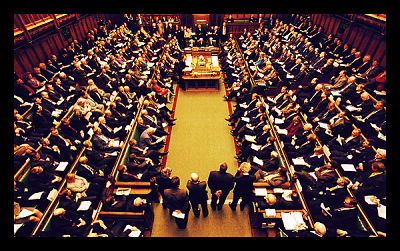
| The Parliament of Canada |
In a parliamentary form of government there are two or more political parties that compete to form the government. The United Kingdom, Canada and Japan are examples of countries that have parliamentary systems. The citizens of the country cast their votes for the party that they think can best run the country. The party that gets the most votes gets control of the government.
Presidential Government
 |
| Barack Obama, President of the United States |
The United States has a presidential form of government. In this form of government two or more political parties compete by having a nominee from the parties run for president. The nominee who gets the most votes becomes the president.
Some Differences Between the Parliamentary and Presidential Governments
In a parliamentary form of government the leader is called a prime minister. In this system citizens vote for the party they want to be the government. All the important positions in the government are people from the same party. This makes it easy for the party in power to make the policies it wants.
The leader of a presidential form of government is called a president. In this form of government the citizens vote for the person they want to be president. However, a president is not free to make the policies he or she wants. In the US the president shares power with legislators called Senators and Representatives. The president, can't make new policies without the agreement of a majority of the Senators and Representatives.
In a parliamentary system the prime minister can easily be removed from the government if he is a bad leader or if members of his party lose confidence in him. In the presidential system it is much harder to remove the president from office. So much so it almost never happens and the president stays in office until the next election.
Click on Read More for some vocabulary exercises.